
Oral Cancer: How Common Is It? Why More Younger Adults Are Being Diagnosed
Oral Cancer Isn’t as Rare as Most People Think
When most people think about cancer screenings, they think about mammograms, colonoscopies, or skin checks. Oral cancer usually doesn’t make that list.
But it should.
Oral cancer and oropharyngeal cancer diagnoses have been steadily rising in the United States, and one of the biggest reasons is something many people have never connected to oral cancer before: HPV.
Recently, Dr. Alpers appeared on Fox 10 Phoenix during Oral Cancer Awareness Month to talk about oral cancer and how common it is – a trend dentists across the country are seeing more often than ever before. Oral cancer is increasingly showing up in younger, otherwise healthy adults.
Historically, oral cancer was strongly associated with smoking and heavy alcohol use. Those risk factors still matter, but they’re no longer the full story.
Today, HPV-related oral cancers are driving a significant increase in diagnoses, particularly cancers found in the throat and back of the tongue.
That’s one reason routine dental visits matter so much. At our office, we’re not just checking teeth. We’re screening for changes and conditions that many people would never notice on their own.
Dr. Alpers talks about HPV’s impact on the rise in oral cancer on Fox 10 Phoenix:

So… How Common Is Oral Cancer?
The numbers are higher than most people expect.
According to the American Cancer Society, an estimated 60,480 Americans will be diagnosed with oral cavity or oropharyngeal cancer in 2026. That works out to more than 165 new diagnoses every single day.
The Oral Cancer Foundation reports that oral and oropharyngeal cancers will cause more than 12,000 deaths this year in the United States alone.
More than 12,000 people will die this year from oral cancer in the US.
What surprises many people is not just the number of cases, but how often these cancers are diagnosed late.
That’s because oral cancer can be incredibly subtle in the beginning.
HPV Is Changing the Conversation Around Oral Cancer and How Common It Is
One of the biggest shifts in oral cancer over the last decade has been the role of HPV.
HPV, or human papillomavirus, is extremely common. In fact, about 80% to 85% of people will be exposed to HPV at some point in their lifetime.
Many HPV infections clear naturally without causing problems. But certain strains, especially HPV-16, are strongly associated with oropharyngeal cancers.
These cancers often develop in areas you can’t easily see yourself, including:
- The back of the tongue
- The throat
- The tonsils
- Soft tissues deeper in the mouth and airway
This is one reason younger adults who don’t smoke and consider themselves healthy are sometimes shocked by an oral cancer diagnosis.
You may think:
“I don’t smoke.”
“I’m too young.”
“I’m healthy.”
But the risk profile for oral cancer has changed. When it comes to how common oral cancer is, that’s exactly why preventive screenings matter.
Your Dentist May Be the First Person to Catch It
Most people see their dentist more regularly than their primary care physician.
And during a dental exam, we’re evaluating far more than teeth.
During your exam and oral cancer screening, we’re looking at:
- The tongue
- The floor of the mouth
- The cheeks
- The throat area
- Gum tissues
- Soft tissue changes
- Lymph nodes
- Areas underneath the tongue
Dentists are often the first healthcare providers to detect suspicious changes before symptoms appear.
We’ve even caught oral cancer in our own office underneath a patient’s tongue during a routine visit and referred them for treatment early.
That’s the kind of thing most people never expect to happen during a dental appointment.
Survival Rates Change Dramatically With Early Detection
This is one of the most important things to understand about oral cancer and how common it is.
When oral cancer is caught early, survival rates can be around 80% to 90%.
When it’s discovered later after spreading, survival rates can drop significantly.
The issue is not that oral cancer is untreatable. The issue is that many cases are discovered too late.
That’s why screenings matter so much, even if you feel perfectly fine.
A Two-Minute Screening Could Save Your Life
One of the most reassuring parts of this conversation is that screening is simple.
At our office, oral cancer screenings are part of our preventive approach to care.
Every new patient receives:
- A comprehensive oral cancer screening
- A VELscope exam
- A CBCT scan
- A full evaluation of oral and surrounding tissues
We also continue oral cancer screenings routinely for our existing patients at least once per year.
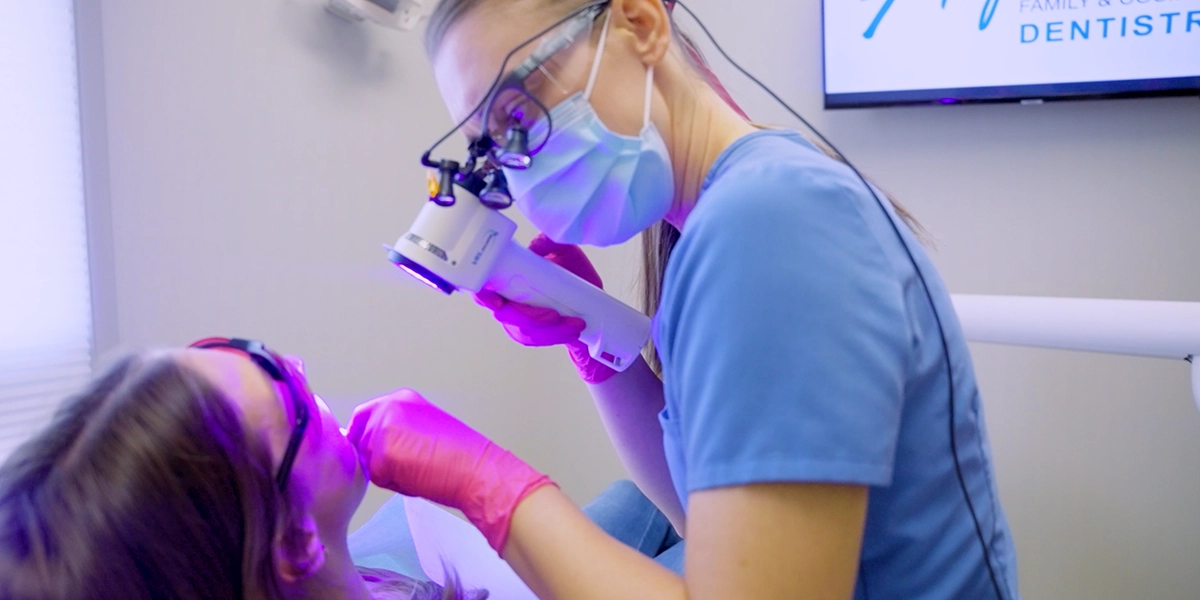
The VELscope screening itself takes only a couple of minutes.
Using a specialized fluorescent light, we can look beneath the tissue surface for abnormal cellular changes that may not be visible to the naked eye.
It’s one of the simplest and most affordable cancer screenings you’ll ever have.
And most importantly, it helps us detect things earlier. When it comes to how common oral cancer is, that matters.
Oral Cancer Isn’t Always Visible
Another misconception is that oral cancer always appears as a large obvious lesion.
Sometimes it’s subtle.
Sometimes it’s hidden.
Sometimes it’s in areas you can’t see yourself.
That’s also why we take things further with CBCT imaging.
Our in-house CBCT allows us to evaluate areas beyond what’s visible during a standard visual exam, including parts of the jawbone, airway, and surrounding anatomy.
In many offices, CBCT scans are only used for dental implants or when someone is already in pain.
We take a more preventive approach.
Our philosophy is simple: if there’s an opportunity to detect something serious earlier, we want to do it.
Other Risk Factors Still Matter Too
HPV has changed the landscape of oral cancer, but traditional risk factors still play an important role.
Smoking and tobacco use remain major contributors.
Alcohol use also increases risk, and when alcohol and tobacco are combined together, the risk multiplies dramatically.
There’s also growing research showing that chronic inflammation in the mouth, including gum disease, may contribute to a higher-risk environment for cancer development.
That ties directly into oral-systemic health and why preventive dental care matters beyond your smile.
What Common Oral Cancer Symptoms Should Never Be Ignored?
You should always have these symptoms evaluated if they last more than two weeks:
- A sore that won’t heal
- Persistent sore throat
- Hoarseness
- Difficulty swallowing
- Thickened tissue
- Red or white patches
- Numbness
- A lump in the neck
- Unexplained bleeding
Even if it seems minor. Even if it doesn’t hurt.
The Reassuring Part: There’s a Clear Preventive Path Forward
The good news is that oral cancer screenings are quick, simple, and proactive.
You don’t need to wait for symptoms.
You don’t need to feel pain.
You don’t need to guess whether something is wrong.
Routine dental visits give us the opportunity to evaluate areas you can’t see yourself and catch concerning changes earlier.
That’s why our team takes screenings seriously.
Because preventive care is about much more than cavities.
It’s about protecting your long-term health.
So How Common is Oral Cancer? Too Common. Book Your Visit Today
Oral cancer assessments are one of those things most people don’t think much about until they realize how important early detection really is.
The reassuring part is that screening is fast, comfortable, and already built into the preventive approach we take with our patients every day.
Whether it’s your first dental visit in years or you simply want a more thorough, technology-driven approach to preventive care, our team is here to help you stay proactive about your health.
At Alpers Dentistry, every new patient receives a comprehensive oral cancer screening that includes VELscope technology, CBCT imaging, and a detailed evaluation by our experienced team.
If you’re ready to take a preventive approach to your health and have peace of mind knowing you’re being thoroughly examined, schedule your visit with our Scottsdale office today. We proudly serve patients throughout Scottsdale, Paradise Valley, Phoenix, Fountain Hills, Tempe, and surrounding communities.
Frequently Asked Questions About How Common Is Oral Cancer

Ready to schedule an appointment?
We look forward to meeting you! To schedule, call or text or book online.

Locations We Serve
Our Scottsdale dental office serves the following areas:

Scottsdale
Paradise Valley
Fountain Hills
Phoenix
Tempe
We also serve these specific communities in Scottsdale AZ:
- Old Town Scottsdale
- Scottsdale Fashion Square
- Camelback Country Estates
- Mountain Shadows
- Arcadia
- Arcadia Lite
- Biltmore Area
- Papago Parkway
- Central Scottsdale
- Gainey Ranch
- McCormick Ranch
- Kierland Commons
- Sweetwater Ranch
- Scottsdale Ranch
- Cactus Corridor
- McDowell Mountain Ranch