
Invisalign and Veneers Before and After: Rachel's Worn Teeth Smile Transformation
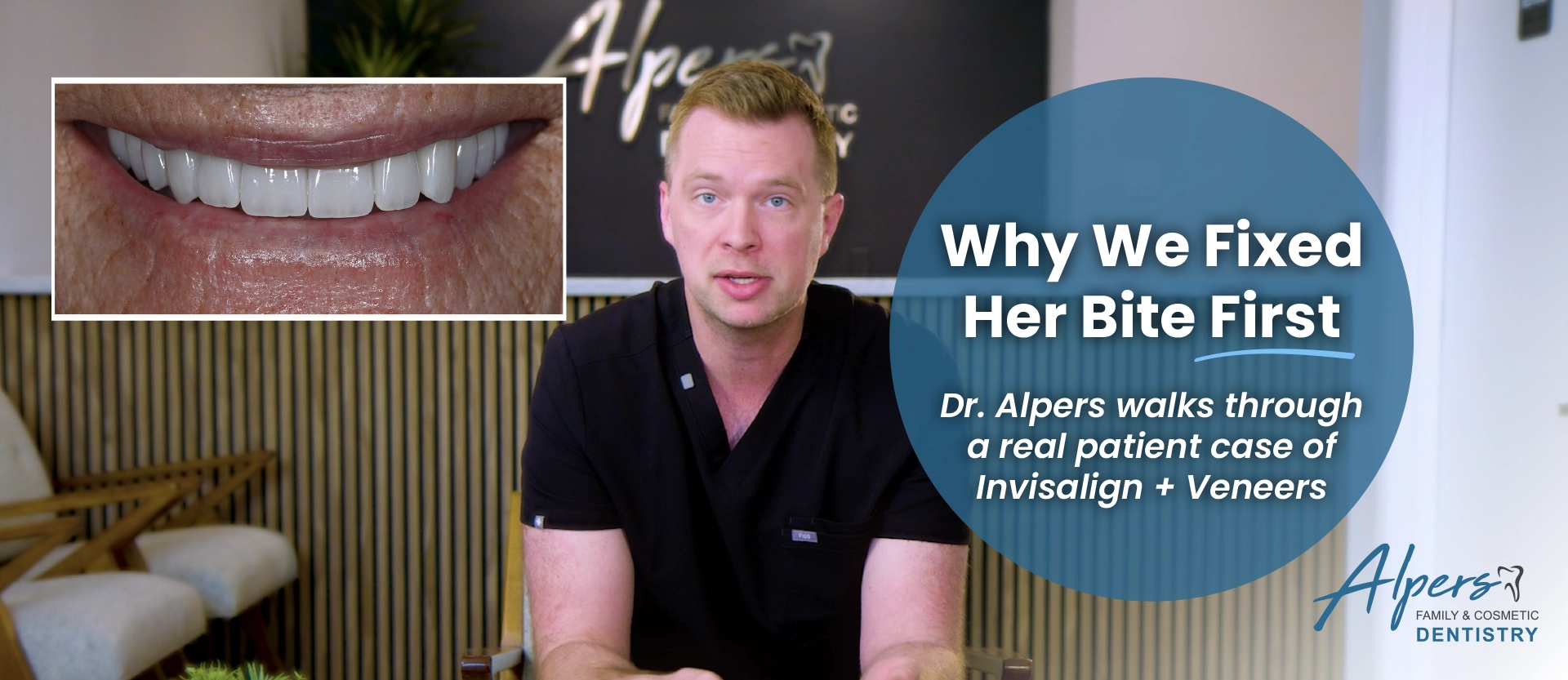
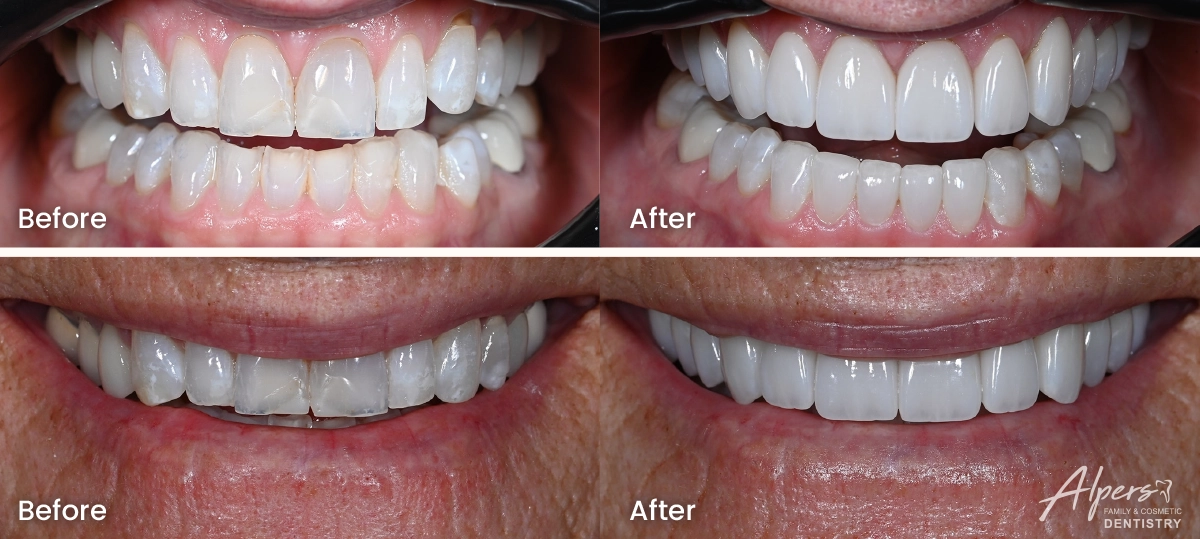
When you look at Rachel's Invisalign and veneers before-and-after photos, the cosmetic change is easy to see.
Her smile is fuller. Her teeth are brighter. The worn, thin edges are gone, and everything looks much more balanced and natural.
But the most important part of this transformation actually happened before we placed the porcelain.
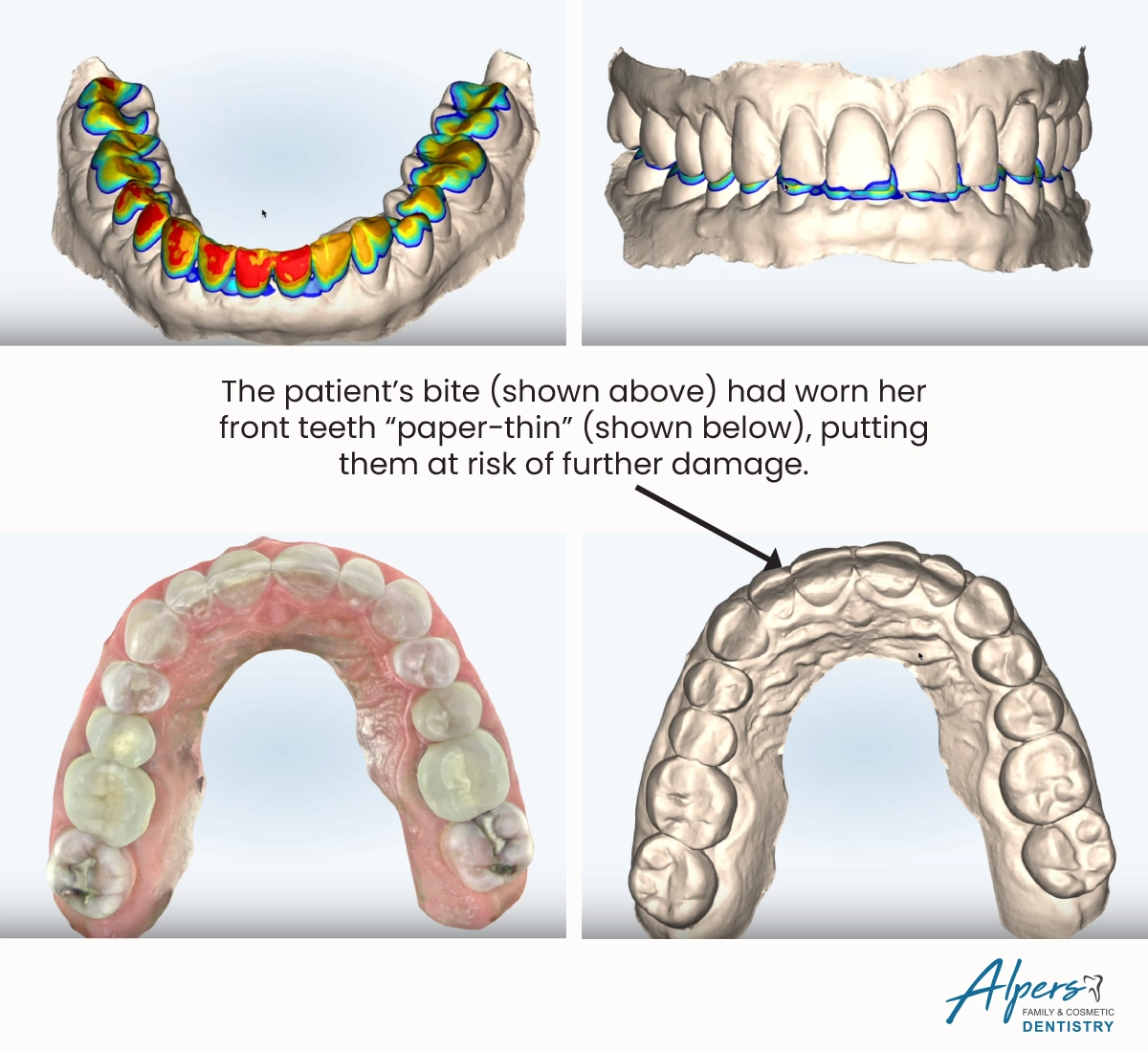
Rachel's front teeth had been wearing against each other for years. Some of her upper teeth had become so thin that Dr. Alpers described them as almost paper-thin. Her lower front teeth were significantly worn down, too.
She wanted to improve her smile, but once we showed her what was happening with her bite, the conversation became bigger than cosmetics.
We were thinking about how to help her keep these teeth for the long haul.
So Rachel chose the longer route: Invisalign first, followed by a combination of porcelain veneers and crowns.
That sequence allowed us to create space, improve the way her teeth came together, and rebuild what had been lost while being much more conservative with the natural teeth underneath.
Rachel is a pseudonym used to protect the patient's privacy.
Rachel's Treatment at a Glance
Main concern: Severely worn, thinning and chipped front teeth
Underlying issue: A deep bite with excessive contact concentrated on her front teeth
First phase: Invisalign to reposition the teeth and create restorative space
Second phase: A combination of porcelain veneers and replacement crowns
Upper teeth restored: 12
Lower teeth restored: 4 severely worn front teeth
Primary goal: Rebuild lost tooth structure while preserving as much of Rachel's remaining natural tooth structure as possible
Result: A brighter, fuller and natural-looking smile built on a better foundation for long-term function
Case completed by: Kristopher Alpers, DDS, at Alpers Family and Cosmetic Dentistry in Scottsdale, Arizona
Why Did Rachel Need Invisalign Before Veneers?
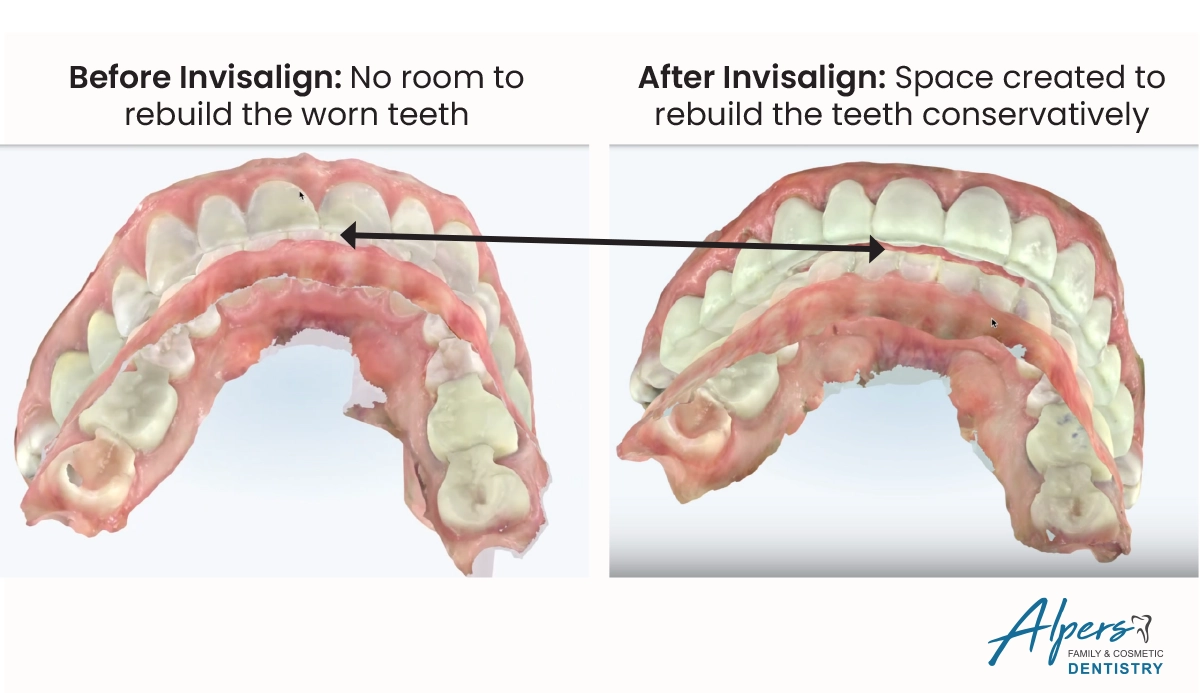
Rachel needed Invisalign first because her deep bite had left almost no room to rebuild her severely worn front teeth with porcelain.
Repositioning the teeth created restorative space, allowing Dr. Alpers to replace lost tooth structure while minimizing how much additional natural tooth structure needed to be removed.
That's the short answer.
But seeing where Rachel started makes it much easier to understand why that mattered.
Rachel's Before: Her Front Teeth Were Becoming Paper-Thin
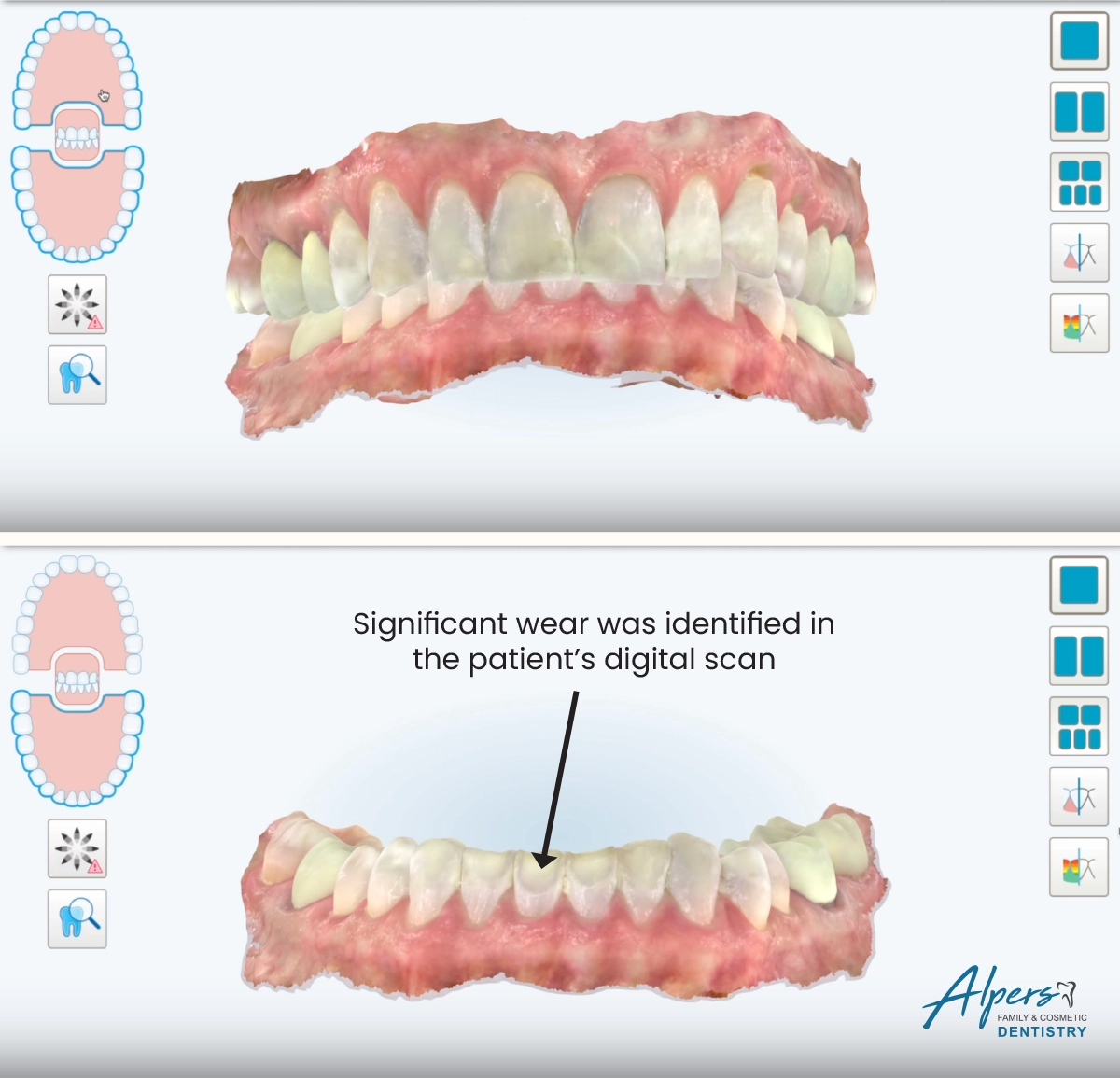
One of the advantages of a digital scan is that we can show you things that are difficult to appreciate when you're simply looking at your teeth in a mirror.
When Dr. Alpers evaluated Rachel's scans, the wear was significant.
Her upper and lower front teeth fit together almost like puzzle pieces. The bite was heavily concentrated in the front, and over time those teeth had been wearing each other down.
Her lower front teeth had become noticeably shorter. Her upper front teeth were thin, chipped and almost translucent in areas.
Dr. Alpers described some of them as being almost “paper-thin.”
So when we talked with Rachel about treatment, we weren't simply saying, “Here's how we can make your smile prettier.”
We were concerned about how much tooth structure she was continuing to lose.
There was also a practical problem.
Her teeth fit together so tightly that there wasn't enough room to put back what had already been lost.
Creating Space With Invisalign Instead of Removing More Tooth
This is where Rachel's case gets interesting.
When people think about Invisalign, they usually think about straightening crooked teeth.
That wasn't the main reason we recommended it here.
For Rachel, Invisalign was part of the restorative plan.
Dr. Alpers wanted to change the relationship between the upper and lower front teeth. By carefully moving the upper front teeth upward and the lower teeth downward, we could create space where essentially none existed before.
And we needed that space because eventually we wanted to put something back.
Rachel had already lost a significant amount of natural tooth structure through wear. If we could create room orthodontically, we wouldn't have to rely as heavily on removing additional tooth structure just to make room for porcelain.
You can actually see that change when comparing Rachel's digital scans before and after Invisalign.
Before, there was virtually no restorative space.
Afterward, we had room to rebuild.
Why the Longer Route Was Actually the More Conservative Route
Rachel's treatment didn't happen overnight.
She went through a significant course of Invisalign before we started the final restorative phase. She could have viewed that as an extra step standing between her and the smile she wanted. Instead, she understood why we were recommending it.
When Dr. Alpers planned the porcelain with the dental laboratory after Invisalign, one of his priorities was clear: he did not want to unnecessarily reduce teeth that were already extremely thin.
In several areas, the goal was almost entirely additive. We could add porcelain to rebuild lost structure rather than aggressively preparing the facial surfaces of the teeth.
That's one of the most important parts of Rachel's before-and-after story.
Sometimes taking more time before the cosmetic dentistry allows us to be more conservative during the cosmetic dentistry.
Dr. Alpers Explains Why We Started With the Foundation
In the video above, Dr. Alpers walks through Rachel's case and explains why this transformation didn't begin with veneers.
Her digital scans showed that the issue wasn't simply cosmetic. Her teeth had become extremely thin from wear, and the way they came together put her at risk of continuing to lose tooth structure.
So we started by deciding what the final smile should look like and then worked backward.
For Rachel, that meant using Invisalign to put the teeth in better positions and create enough room for the restorative work. Only then did we move forward with the porcelain.
As Dr. Alpers explains, Invisalign made the transformation possible while also allowing us to approach the natural teeth more conservatively.
What Happened After Invisalign?
Once Rachel had completed the necessary tooth movement, we could finally move into the phase she had been waiting for.
The porcelain.
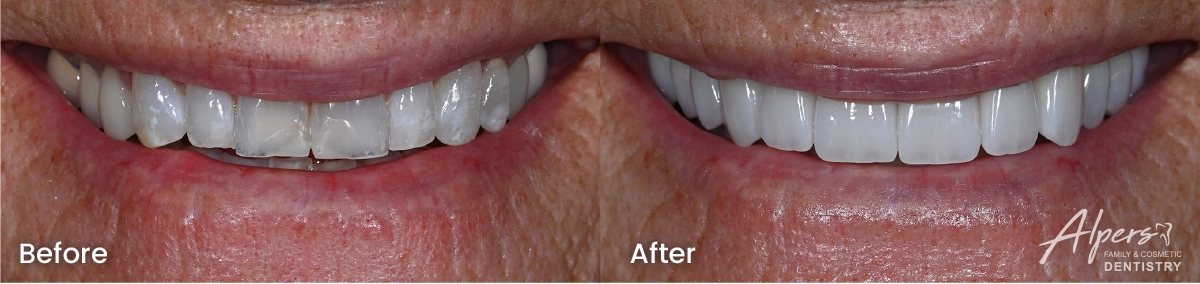
Rachel ultimately had 12 upper teeth restored with a combination of porcelain veneers and crowns.
That's an important distinction.
We didn't simply put 12 veneers on her teeth.
Some of Rachel's older crowns needed to be replaced. Other teeth could be treated more conservatively with veneers. Dr. Alpers evaluated the individual teeth and selected the appropriate restoration while working with the dental laboratory to make everything look like one cohesive smile.
Why Did Rachel Have 12 Upper Teeth Restored?
Because that's how many teeth she shows.
Rachel has a big smile. When she smiles naturally, you can see approximately 10 to 12 upper teeth.
If we had created beautiful new porcelain on the front six teeth and stopped there, you could potentially see an obvious transition between those teeth and the teeth farther back.
So we designed the restoration around Rachel's actual smile, not an arbitrary number of veneers.
The goal wasn't for someone to look at her and think, “Those are beautiful veneers.”
The goal was for someone to think, “She has a beautiful smile.”
Why We Only Restored Four Lower Teeth
The lower teeth were a different story.
Rachel wanted to be as conservative as possible, and there was no reason to automatically restore an entire lower arch just because we had treated 12 teeth on top.
Instead, we focused on the four lower front teeth that had suffered the most significant wear.
Again, the Invisalign phase helped.
By creating space before we began the restorative work, we now had room to rebuild those shortened lower teeth while leaving the neighboring teeth alone.
That's what conservative dentistry can look like in a larger smile transformation.
It doesn't necessarily mean doing very little treatment.
It means doing what has a clear purpose and leaving alone what doesn't need to be treated.
Designing Rachel's Veneers After Invisalign
Once we had solved the functional puzzle, we could focus on the fun details.
Rachel wanted a brighter smile, but she didn't want it to look unnaturally white. She also had a very understandable opinion about translucency.
Her original front teeth had become so thin that they looked somewhat gray and see-through. While natural enamel has translucency, Rachel didn't want her new smile to recreate the quality she disliked about her worn teeth.
So we planned porcelain that would still have natural variation and dimension without looking overly translucent. Then we worked through the shape.
When Rachel was wearing her temporary restorations, she was already extremely happy with the transformation. But temporary teeth also give us an opportunity to see the smile on a real person before finalizing everything.
Dr. Alpers evaluated Rachel while she smiled, spoke and held her lips at rest.
Could the two front teeth be a fraction longer?
Could we soften and round certain edges?
Were the canines slightly too long?
Did the edges of the teeth follow her natural smile appropriately?
These changes can come down to fractions of a millimeter. You probably won't identify any one of them when you see the final result. That's exactly what we want. You should notice Rachel, not individual pieces of dental work.
Rachel's Invisalign and Veneers “After”
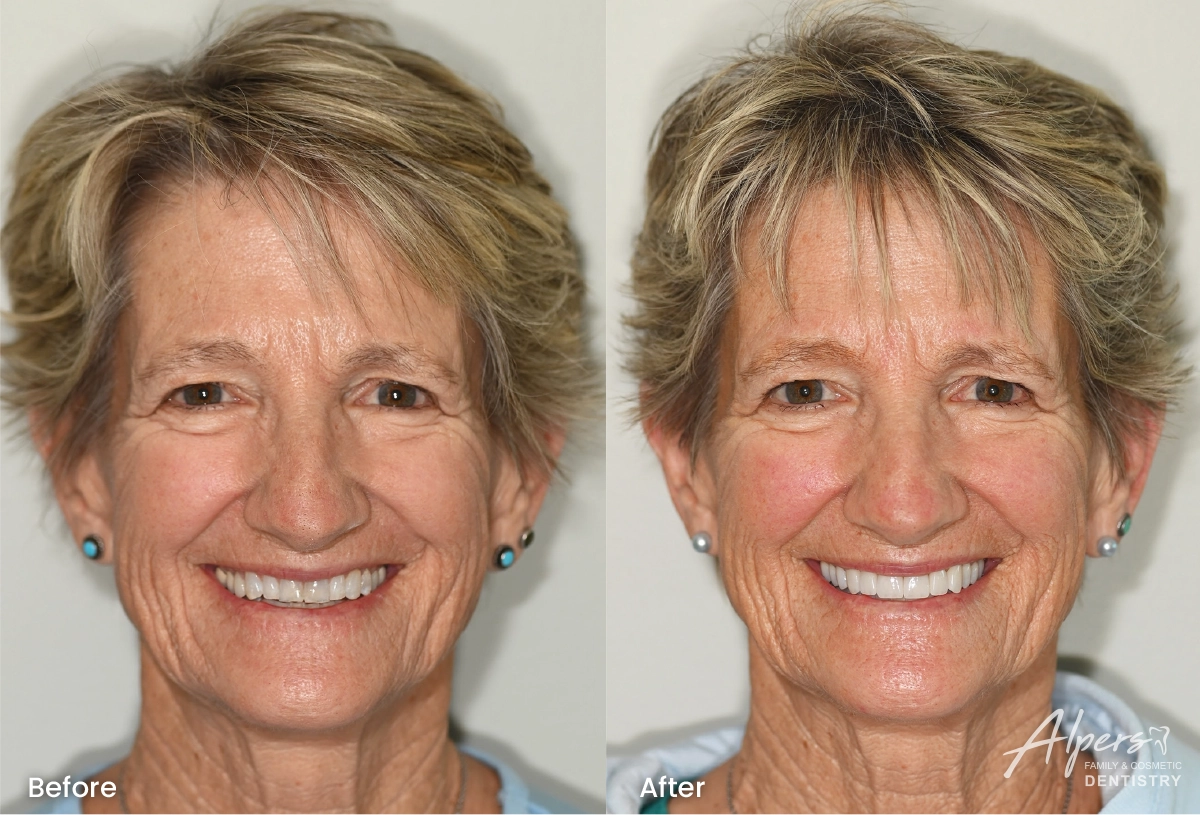
The difference from where Rachel started is dramatic.
Her worn, thin front teeth have their shape and proportions back. Her smile is brighter and fuller. The porcelain flows naturally across the width of her upper smile, and the four restored lower teeth blend with the neighboring teeth.
But there's another before and after happening here that isn't as obvious in a photograph.
Before Invisalign: Rachel's bite left essentially no room to rebuild her severely worn teeth.
After Invisalign: We had created the space necessary to restore them much more conservatively.
That's a big reason Dr. Alpers likes this case.
The cosmetic result is beautiful, but we didn't have to choose between creating something beautiful and preserving as much natural tooth structure as we reasonably could.
Careful planning helped us accomplish both.
What Rachel's Case Shows
Rachel's Invisalign and veneers before and after demonstrates something that's easy to miss when you only look at the final smile:
A smile makeover doesn't always begin with porcelain.
When severely worn teeth and the way your bite comes together leave too little room for restorations, orthodontic treatment can sometimes create the space needed to rebuild the teeth more conservatively.
For Rachel, completing Invisalign first allowed Dr. Alpers to improve the restorative space before rebuilding her smile with a combination of veneers and crowns on 12 upper teeth and restoring four severely worn lower front teeth.
The process took longer, but there was a reason for every step.
And Rachel trusted us through it.
When everything was finally finished, she gave Dr. Alpers a big hug. After a long treatment journey, she was thrilled to finally look at her front teeth and genuinely love what she saw.
Common Questions About Rachel's Invisalign and Veneers Before and After
Why did Rachel get Invisalign before veneers?
Rachel had a deep bite and severe wear on her front teeth. There was very little room between the upper and lower teeth to replace the tooth structure she had lost. Invisalign repositioned the teeth and created restorative space before the porcelain was placed, allowing Dr. Alpers to take a more conservative approach to the natural teeth.
Can Invisalign create space for veneers on worn teeth?
In certain cases, yes. Rachel's case is one example. Invisalign was used to reposition her upper and lower front teeth so there was room to rebuild the worn areas with porcelain. Whether that approach makes sense depends on your bite, tooth position, amount of wear and overall restorative plan.
How many veneers did Rachel get after Invisalign?
Rachel had 12 upper teeth restored with a combination of porcelain veneers and crowns, rather than 12 veneers alone. She also had the four severely worn lower front teeth restored. Some existing upper crowns needed replacement, while other natural teeth were appropriate for veneers.
Does everyone need Invisalign before getting veneers?
No. Rachel needed Invisalign because of her specific bite, severe tooth wear and lack of restorative space.
If you're primarily wondering whether you need Invisalign before veneers, we've written a separate guide explaining when Dr. Alpers may recommend orthodontic treatment before cosmetic dentistry:
How long did Rachel's Invisalign and veneers transformation take?
Rachel went through a longer course of Invisalign before beginning the final restorative phase. Because the exact treatment duration isn't the important part of this case, we don't want to give a timeline that could create the wrong expectation for someone else's treatment. Invisalign and restorative treatment timelines vary depending on the amount of tooth movement needed, your bite, healing, and the final restorative plan.
Considering Invisalign and Veneers in Scottsdale?
If you're looking at Invisalign and veneers before-and-after cases because your own teeth are worn, chipped, short or simply don't look the way you'd like them to, the final photograph is only part of the story.
We want to understand why your teeth look the way they do now.
Your bite, tooth position, enamel, existing dental work, amount of wear, and even how many teeth you show when you smile can all influence what we'd recommend.
You may benefit from Invisalign before veneers.
You may not need Invisalign at all.
The first step is figuring that out before we design the final smile.
At Alpers Family and Cosmetic Dentistry in Scottsdale, Dr. Alpers takes the time to show you what we're seeing, explain the options, and work backward from the result you're hoping to achieve.
Call or text (480) 998-3355 to schedule a cosmetic consultation.
About This Case
Rachel's case was planned and completed by Kristopher Alpers, DDS, at Alpers Family and Cosmetic Dentistry in Scottsdale, Arizona. This case study was developed from Dr. Alpers' treatment documentation and explanations of the case. Individual treatment recommendations and results vary based on your oral health, bite, tooth structure and cosmetic goals.

Ready to schedule an appointment?
We look forward to meeting you! To schedule, call or text or book online.

Locations We Serve
Our Scottsdale dental office serves the following areas:

Scottsdale
Paradise Valley
Fountain Hills
Phoenix
Tempe
We also serve these specific communities in Scottsdale AZ:
- Old Town Scottsdale
- Scottsdale Fashion Square
- Camelback Country Estates
- Mountain Shadows
- Arcadia
- Arcadia Lite
- Biltmore Area
- Papago Parkway
- Central Scottsdale
- Gainey Ranch
- McCormick Ranch
- Kierland Commons
- Sweetwater Ranch
- Scottsdale Ranch
- Cactus Corridor
- McDowell Mountain Ranch