
Procedure for Correcting a Gummy Smile: A Complete Guide to Gum Contouring
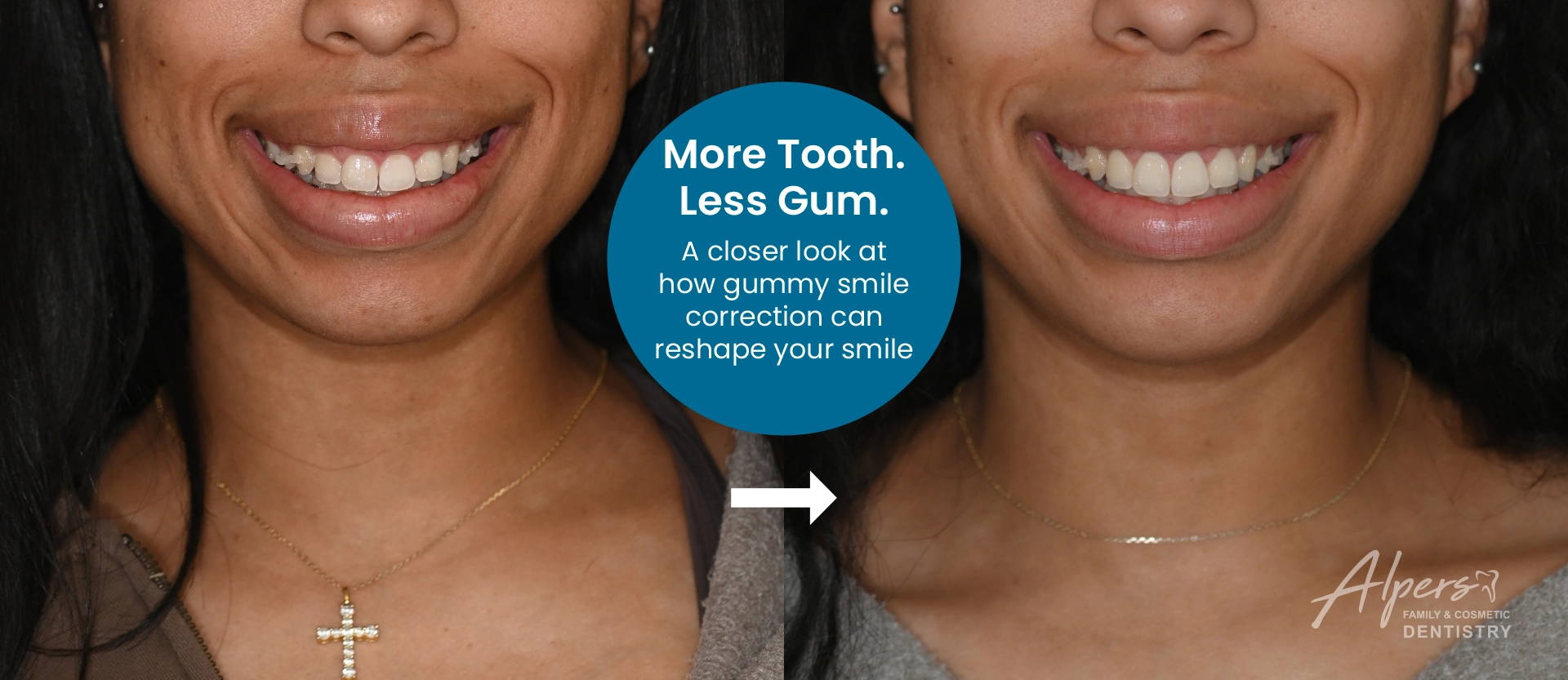
If you look at your smile and wish you could see a little more tooth and a little less gum, gum contouring may be the procedure you're looking for.
The procedure for correcting a gummy smile involves carefully removing and reshaping excess gum tissue to expose more of the natural tooth. Depending on why you have a gummy smile and how much tissue needs to be changed, this may be called gum contouring, gingivectomy, gingival resection, gum surgery, or in some situations, pocket reduction surgery.
The important part is not really what we call it. It's figuring out why your teeth look short in the first place and whether changing the gumline will create the result you have in mind.
At Alpers Family and Cosmetic Dentistry in Scottsdale, that's where we start. Dr. Alpers looks at your teeth, gums, smile line, proportions, and overall oral health before recommending treatment. Sometimes excess gum tissue really is hiding more of your natural tooth than you realize. Other times, there's more going on, and gum contouring alone isn't necessarily the right answer.
Here's what you should know if you're considering gummy smile correction.
What is the procedure for correcting a gummy smile?
When excess gum tissue is causing a gummy smile, the procedure generally involves removing and reshaping that tissue to expose more of the natural tooth and create a more balanced gumline.
Think of a picture sitting behind a mat in a frame. The picture itself isn't changing, but changing the border can change how much of it you see.
Something similar can happen with your teeth.
Your teeth may be perfectly normal in size, but if gum tissue covers more of them than it ideally should, they can look unusually short or square. Carefully reshaping that tissue can reveal more of the tooth that's already there.
This is why you'll sometimes hear someone say they want their teeth to look "longer." Gum contouring doesn't physically lengthen the tooth. Instead, it may uncover additional tooth structure so the visible portion looks longer.
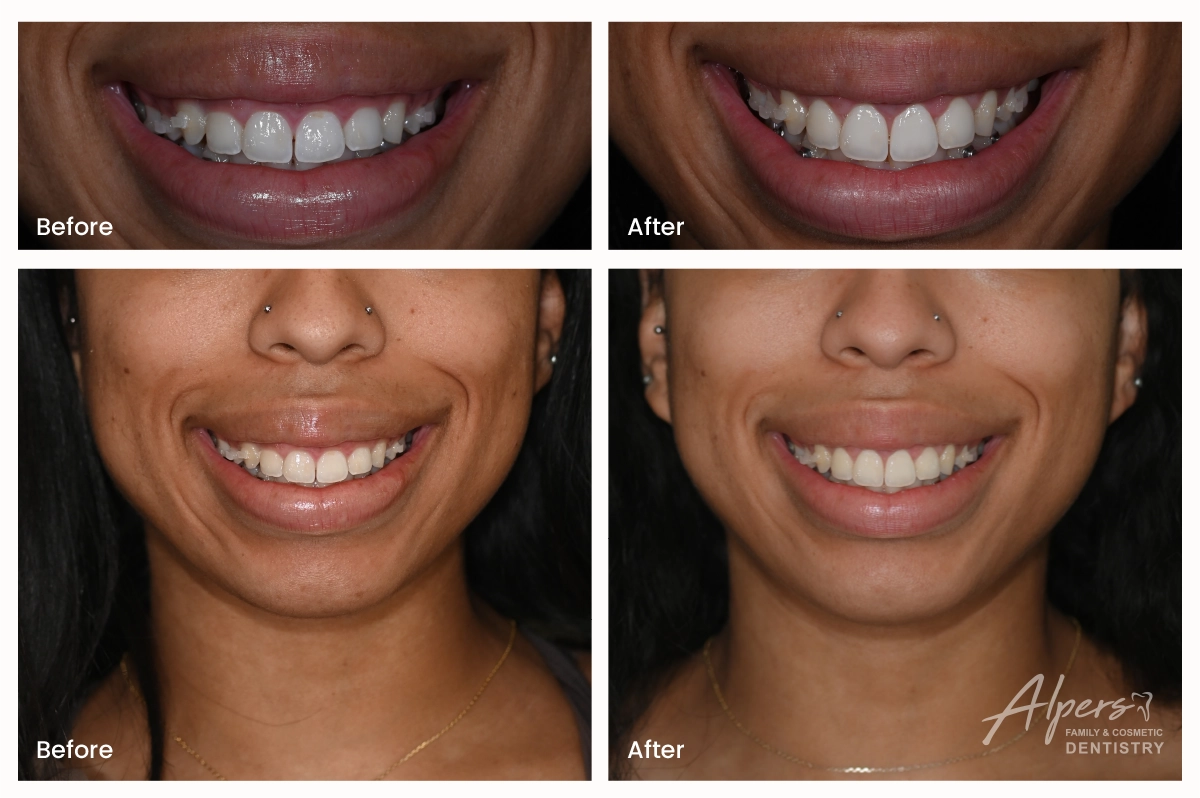
What causes a gummy smile?
A gummy smile can have several causes, and the cause matters because not every gummy smile should be treated the same way.
Excessive gum display can relate to a number of causes, including the amount or position of gum tissue around your teeth, the way your teeth erupted, the movement or position of your upper lip, tooth proportions, or the relationship between your teeth and jaws.
That's one reason we don't like treating a gummy smile based on a photo alone.
If your concern is primarily that your upper front teeth look small because they're covered by excess gum tissue, reshaping the gums can make a significant cosmetic difference. But if the amount of gum you see when smiling comes primarily from lip or jaw anatomy, simply removing gum tissue may not address the underlying reason.
The first step is figuring out which situation applies to you.
Is gum contouring the same as a gingivectomy?
Gum contouring and gingivectomy are closely related terms, but they're not always used to describe exactly the same goal.
A gingivectomy refers to removing gum tissue. Gum contouring generally emphasizes reshaping the gumline, particularly when we're talking about improving the appearance and proportions of a smile.
You may also come across terms such as:
There can be overlap in technique, but the reason for doing the procedure matters.
Someone who wants to expose more tooth for a more proportional smile has a very different goal from someone who needs periodontal treatment because of gum disease. That's why the terminology you see online can become confusing quickly.
How does laser gum contouring work for smile improvement?
Laser gum contouring uses dental laser technology to precisely remove and reshape gum tissue around the teeth. The goal is to expose the appropriate amount of tooth while creating a gumline that looks natural with the rest of your smile.
Before changing anything, we need to determine where the gumline should actually be.
That's an important distinction. Good cosmetic dentistry isn't simply about taking away gum tissue until the teeth look longer. We're looking at proportion and symmetry. How much tooth should show? Where should the gumline sit around each tooth? How will one tooth relate to the one next to it? What will the result look like when you smile rather than when you're simply looking at individual teeth?
Once the desired shape has been established, laser technology can allow the gum tissue to be reshaped with a high degree of control.
At our Scottsdale practice, advanced laser treatment is one of the technologies available to us. But as Dr. Alpers often emphasizes in other areas of dentistry, the technology itself isn't the treatment plan. It's a tool. Knowing where, why, and how much tissue to change is what determines whether the final smile looks natural.
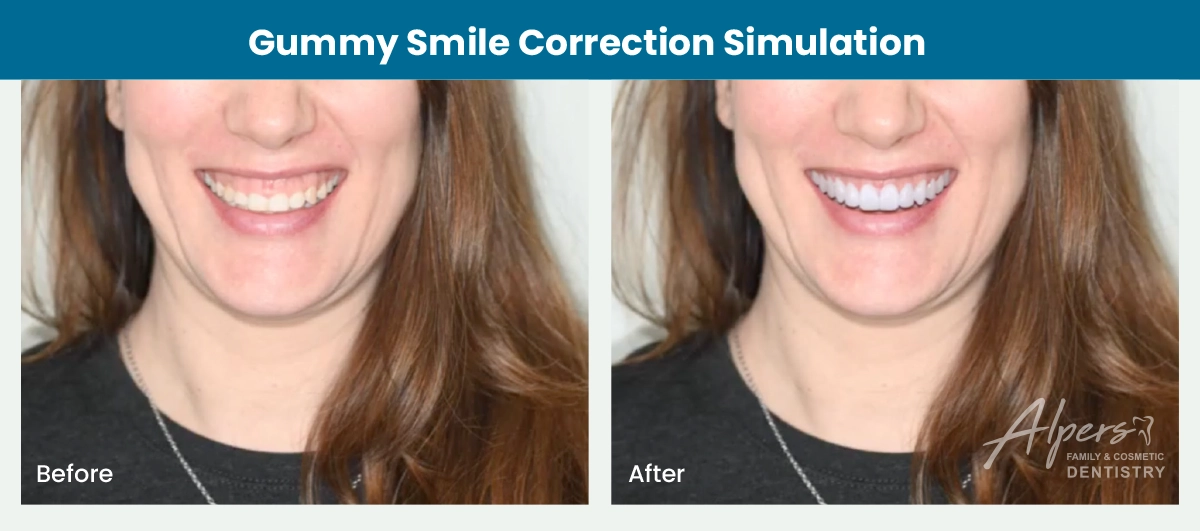
What happens during a gummy smile correction procedure?
The exact procedure depends on your gum anatomy and treatment goals, but gummy smile correction generally follows a process of evaluation, planning, tissue reshaping, and healing.
1. We figure out why your smile looks gummy
This is arguably the most important step.
Dr. Alpers evaluates the relationship between your gums and teeth rather than assuming that visible gum tissue automatically means you need a gingivectomy.
We also want to understand what you see.
Maybe you've always thought your front teeth look too short. Maybe one side of your gumline sits lower than the other. Or maybe you like the shape and color of your teeth but feel that your gums dominate your smile.
Those are different concerns, even though someone might describe all three as a "gummy smile."
2. We determine how much tooth can appropriately be exposed
The goal isn't simply to remove as much gum tissue as possible.
There are biological and cosmetic boundaries that matter. Your gum tissue has an important job, and we want the finished gumline to be healthy as well as attractive.
This is where thoughtful planning makes a difference.
3. The gumline is carefully reshaped
When gum contouring is appropriate, excess tissue is removed and the gumline is sculpted around the teeth according to the treatment plan.
For someone whose natural teeth are partially hidden by excess tissue, you can often think of this as revealing tooth structure rather than changing the tooth itself.
4. The gums begin healing around their new contours
Your gum tissue needs time to settle and heal after treatment. You'll receive instructions for keeping the area clean and protecting it during the initial healing period.
How much longer will my teeth look after gum contouring?
How much additional tooth shows after gum contouring depends on how much healthy tooth structure is currently covered by gum tissue and how far the gumline can safely be repositioned.
This isn't a treatment where we choose a number of millimeters based purely on how long you'd like your teeth to look.
That's actually one of the most useful things to understand before treatment.
You may come in thinking, "I want longer teeth," when what you really want is a better tooth-to-gum proportion. Sometimes a relatively subtle adjustment to the gumline changes the entire impression of a smile.
And because every smile is different, the right amount of change for you may not be the right amount for someone else.
Is gum contouring effective for a gummy smile?
Yes, gum contouring can be very effective when excess or uneven gum tissue is the reason your teeth look short or your smile looks gummy.
The key phrase there is when gum tissue is the cause.
If your gummy smile is related to something other than excess gum coverage, another treatment or combination of treatments may make more sense.
That's why we'd rather diagnose the reason first than promise that one cosmetic procedure fixes every gummy smile.
Can gum contouring make my smile more symmetrical?
Yes. Gum contouring can also be used to improve an uneven gumline, even if the total amount of gum showing isn't your main concern.
You might have one front tooth that appears shorter than the other simply because the gumline sits differently around it. Or several teeth may have slightly different gum heights that make an otherwise healthy smile feel uneven.
In those situations, the change we're making may be quite small.
This is also where cosmetic planning matters. Symmetry doesn't mean making every gumline exactly identical. Natural teeth and gums have their own contours. The goal is to create proportions that work together and don't draw your eye to one uneven area.
Can your gums grow back after contouring?
Gum tissue can change after treatment, but whether a gumline returns toward its previous position depends on what tissue was removed, why it was there, the underlying anatomy, and the type of procedure performed.
This is another reason a proper evaluation matters.
Removing visible tissue without understanding what's underneath it isn't the same as planning a stable gum contour. In some cases, the relationship between the gum tissue, tooth, and underlying bone needs to be considered when determining what kind of procedure will produce an appropriate long-term result.
If you're worried that you'll go through treatment only to have your gummy smile come right back, bring that up during your consultation. It's a good question, and the answer should be based on your anatomy rather than a blanket promise.
How long does recovery take after gum contouring surgery?
Initial healing after gum contouring generally happens relatively quickly, but the exact recovery period depends on how much tissue was treated and the type of procedure performed. Your gums may take longer to completely settle into their final appearance.
A small amount of laser contouring around a few teeth isn't necessarily the same recovery as more extensive gum surgery.
That's why broad timelines you find online aren't always very helpful.
We'll explain what to expect based on the procedure you're actually having, including how to care for the area while it heals and when you can return to your normal routine.
Is gum contouring painful?
Gum contouring is performed with your comfort in mind, and the area can be numbed during treatment. Some tenderness or sensitivity during healing can occur, and how you feel afterward depends partly on the extent and type of gum treatment performed.
For many people considering the procedure, this becomes one of the biggest questions once they understand what gum contouring involves.
We'll cover pain, numbing, what the first few days feel like, and recovery in much more detail in our guide to whether gum contouring hurts. (More to come!)
Are there non-surgical alternatives for improving gum aesthetics?
There are other ways to improve the appearance of a gummy smile, but the right alternative depends on what's actually causing the excessive gum display.
For example, some gummy smiles are influenced by the movement of the upper lip rather than excess gum tissue around the teeth. Tooth position and tooth proportions can also affect how much gum you perceive when you smile.
Cosmetic treatments involving the teeth themselves may sometimes change the overall proportions of a smile, while other causes require an entirely different approach.
What we wouldn't recommend is choosing an alternative simply because it sounds less invasive.
The more useful question is:
What's causing my gummy smile, and what is the most conservative way to address that cause?
That fits the way we approach cosmetic dentistry at Alpers Dentistry. We believe in preserving healthy tooth structure whenever possible and recommending treatment because it has a clear purpose, not because it's the most extensive option available.
Do regular dentists do gum contouring?
Some general and cosmetic dentists perform gum contouring, but not every dentist who offers cosmetic dentistry performs the full scope of gummy smile correction. More involved cases can require both surgical skill and an understanding of cosmetic smile design.
That's an important distinction if you're choosing a dentist for gummy smile correction.
In its simplest form, gum contouring may involve relatively minor reshaping of the gum tissue. But some gummy smiles require more extensive surgical treatment to properly reposition the gumline while accounting for the tooth and underlying bone. Many cosmetic dentists focus primarily on treatments such as veneers, bonding, and whitening and don't routinely perform that level of gum surgery.
Dr. Alpers believes the ideal combination for gummy smile correction is a dentist who is comfortable with both the surgical and cosmetic sides of treatment. You need to understand the biology and anatomy beneath the gumline, but you also need to know where the gumline should end up to create natural tooth proportions, symmetry, and a smile that fits the person's face.
That's one reason Dr. Alpers' approach to these cases is so comprehensive. He performs both surgical and cosmetic dentistry and uses detailed photography, digital scanning, and 3D imaging when appropriate to evaluate what's happening beneath the gum tissue before determining how the smile should be changed.
If you're looking for a dentist for gummy smile correction, it's worth asking not only, "Do you do gum contouring?" but also, "Do you perform the surgical procedures yourself, and how do you plan the cosmetic result?"
Do I need gum contouring, veneers, or both?
You don't automatically need porcelain veneers just because your teeth look short. If healthy natural tooth structure is simply hidden beneath excess gum tissue, addressing the gumline may be enough to create the proportions you're looking for.
This is a particularly important distinction if you've been looking at smile makeovers online.
Someone can look at their short front teeth and assume, "I need bigger teeth." But we first want to know why those teeth look small.
If excess gum tissue is the main concern and you're otherwise happy with your teeth, gum contouring alone may be enough. The before-and-after example above (in this article's main photo) is a good example of that. That patient specifically wanted the most conservative treatment possible, so gummy smile correction was the only cosmetic treatment performed.
Other times, the gumline is only one part of what someone wants to change.
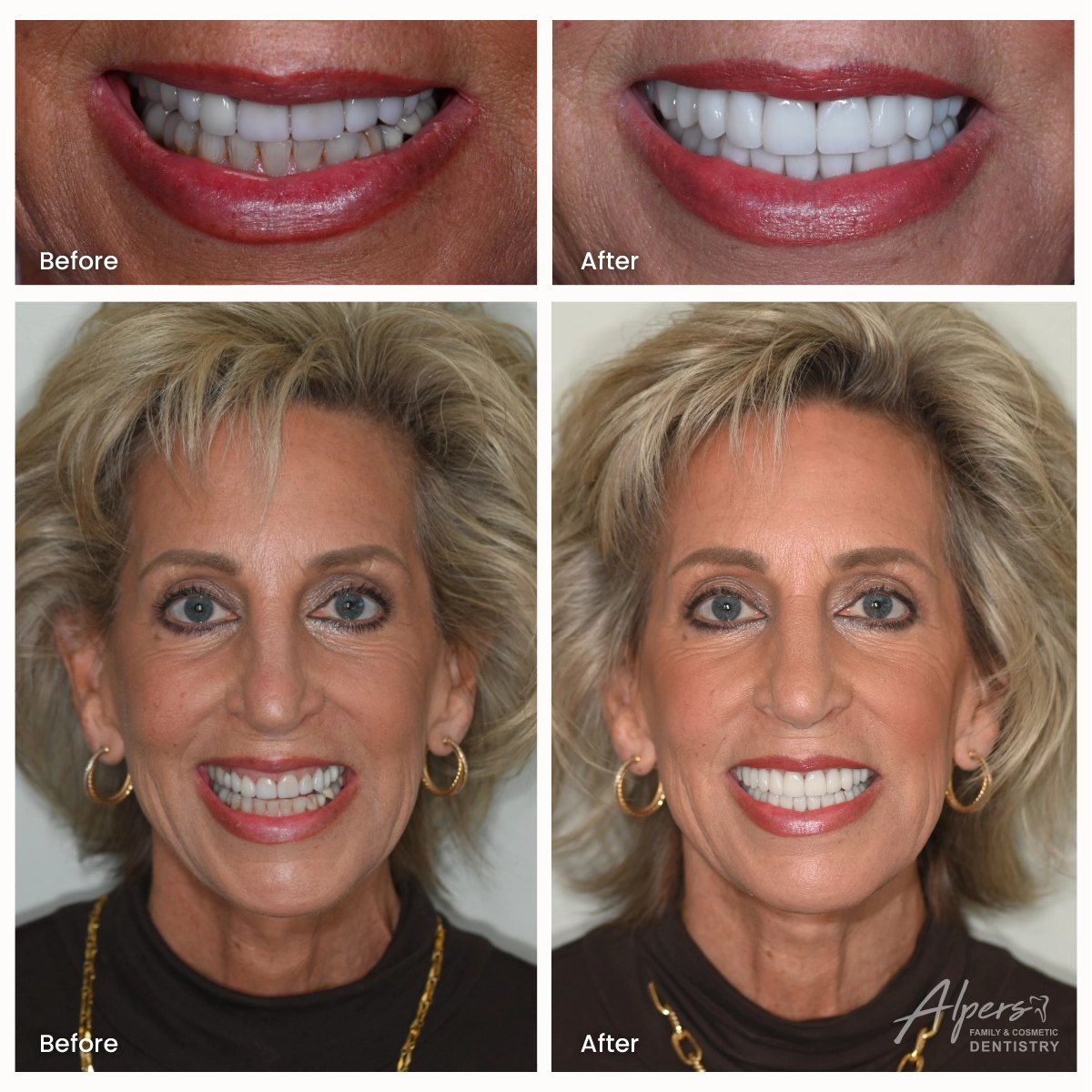
For example, if you want to expose more of your natural teeth and change their color, shape, size, wear, or existing dental work, Dr. Alpers may incorporate gum contouring into a larger treatment plan using veneers, crowns, or other restorative or cosmetic dentistry.
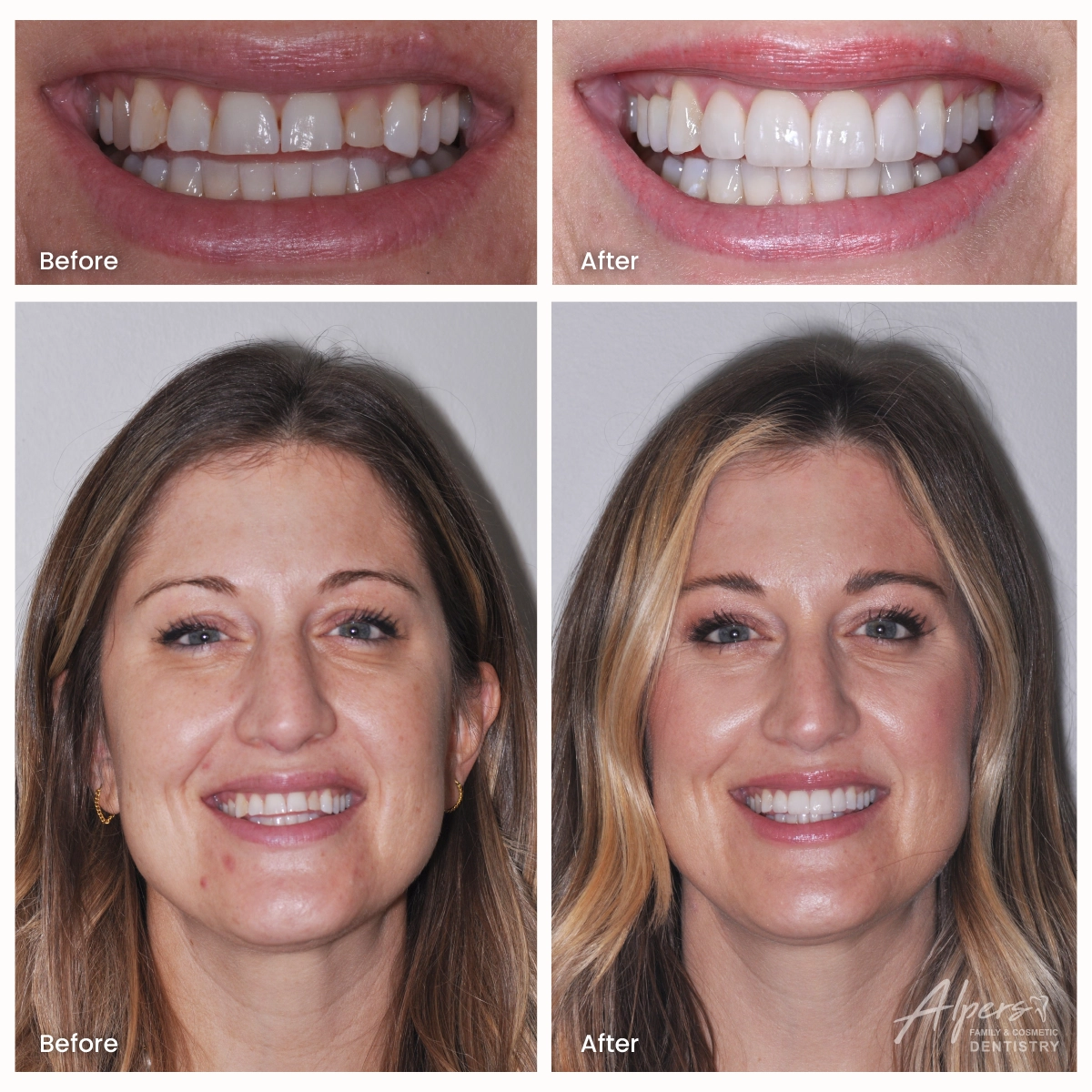
The example below includes gummy smile correction, but gum contouring was not the only treatment performed. Each patient had additional goals for their teeth, so their final results reflect the complete treatment plan rather than gum contouring alone.
Who is a good candidate for gummy smile correction?
You may be a candidate for gum contouring if:
✔️ Your teeth look short because gum tissue covers part of the visible tooth.
✔️ You show more gum than you'd like when you smile.
✔️ Your gumline looks uneven around otherwise healthy teeth.
✔️ You want to improve tooth-to-gum proportions without unnecessarily changing healthy teeth.
✔️ Your gums and overall oral health allow the procedure to be performed appropriately.
There are also reasons we may recommend treating another issue first or choosing a different approach.
That's what the consultation is for.
What should I ask at a gum contouring consultation?
If you're considering gummy smile correction, these questions can help you understand exactly what's being recommended:
- What is causing my gummy smile?
- Are my teeth actually short, or are they partially covered by gum tissue?
- How much additional tooth can safely be exposed?
- Would you use a laser for my procedure?
- Do I need gum contouring alone or another treatment as well?
- What will my gumline look like after it heals?
- What is the likelihood of the gum tissue changing or growing back?
- How long should my particular recovery take?
- What are my alternatives if I don't want gum surgery?
You should come away understanding not just what someone wants to do, but why they're recommending it for your smile.
Is gummy smile correction worth it?
Gummy smile correction can be a worthwhile treatment when the amount or shape of your gum tissue is what keeps you from liking your smile, especially when reshaping the gums can reveal natural tooth structure that's already there.
For the right person, this can be a relatively focused change with a noticeable effect on overall smile proportions.
But cosmetic dentistry shouldn't start with the procedure. It should start with the result you're hoping to achieve.
Maybe you want your front teeth to look longer. Maybe you've never liked how much gum shows in photographs. Maybe you've realized that what bothers you isn't actually your teeth at all, but the frame around them.
Tell us that first.
From there, we can determine whether gum contouring is the most sensible way to get you closer to the smile you have in mind.
Gummy Smile Correction in Scottsdale, AZ
At Alpers Dentistry, Dr. Kristopher Alpers provides gummy smile correction as part of our cosmetic dental services in Scottsdale. Our approach is conservative and personalized: understand what you're seeing, determine why it's happening, and then talk through the options that make sense for your teeth and gums.
Our practice also uses advanced technology, including laser treatment and smile simulations, as part of a broader commitment to precise, thoughtful cosmetic dentistry.
If you've been searching because you want longer-looking teeth and less visible gum tissue, you don't need to know which procedure to ask for before you come in.
That's our job to figure out with you.
You can start by scheduling a cosmetic consultation with Dr. Alpers to find out what's causing your gummy smile and whether gum contouring is an appropriate option for you.

Ready to schedule an appointment?
We look forward to meeting you! To schedule, call or text or book online.

Locations We Serve
Our Scottsdale dental office serves the following areas:

Scottsdale
Paradise Valley
Fountain Hills
Phoenix
Tempe
We also serve these specific communities in Scottsdale AZ:
- Old Town Scottsdale
- Scottsdale Fashion Square
- Camelback Country Estates
- Mountain Shadows
- Arcadia
- Arcadia Lite
- Biltmore Area
- Papago Parkway
- Central Scottsdale
- Gainey Ranch
- McCormick Ranch
- Kierland Commons
- Sweetwater Ranch
- Scottsdale Ranch
- Cactus Corridor
- McDowell Mountain Ranch